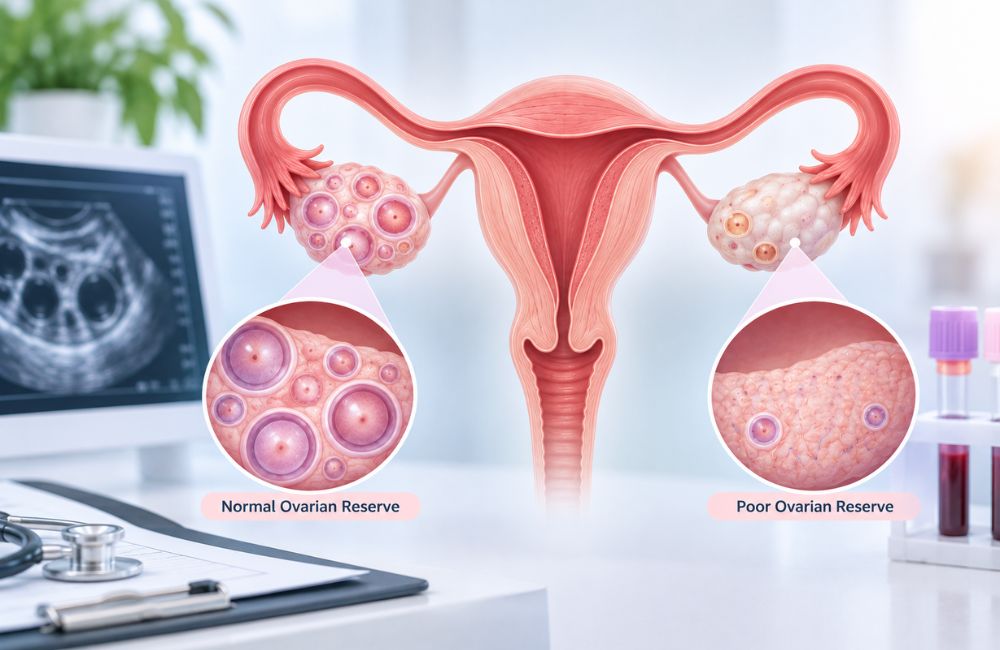
What Is Poor Ovarian Reserve?

Women are born with a limited number of eggs, and the quality and quantity of eggs decrease naturally as time passes. Poor ovarian reserve is defined as the reduced reserve of eggs left in the ovaries as compared to the age of a woman.

While age is the most common factor in this natural decline, other factors can also contribute:

  • Prior ovarian surgery (such as cyst removal)
  • Exposure to chemotherapy or pelvic radiation
  • Certain genetic or autoimmune conditions
  • Unexplained causes, where ovarian reserve diminishes earlier without an identifiable medical trigger

A reduced ovarian reserve is not synonymous with absolute infertility. It simply provides clinical context on ovarian response.

Signs & Diagnosis

Poor ovarian reserve rarely presents noticeable physical symptoms. Some women may notice slightly shorter menstrual cycles, but many experience regular periods.

Clinicians rely on standard, evidence-based diagnostic assessments:

Test / Factor What It Helps Assess
AMH (Anti-Müllerian Hormone) Estimates remaining ovarian reserve and expected response to fertility medications
AFC (Antral Follicle Count) Ultrasound assessment of small, visible resting follicles in both ovaries
Age Key indicator of egg quality and overall reproductive potential
FSH & Estradiol Day 2–3 blood tests that provide supplemental context on ovarian function

Low AMH and Poor Ovarian Reserve

Anti-Müllerian Hormone (AMH) is produced by the granulosa cells of small growing follicles. A low AMH level is a primary biological marker used to assess low ovarian reserve.

However, dealing with low AMH poor ovarian reserve does not mean pregnancy is impossible. AMH reflects egg quantity, not whether an egg can successfully fertilise. Many women with low AMH still ovulate healthy eggs each month and can conceive either naturally or through medical care.

Poor Ovarian Reserve Treatment Options

Treatment protocols depend on your age, duration of infertility, partner semen parameters, and diagnostic results. While no medical treatment can recreate or replenish depleted eggs, modern reproductive medicine focuses on maximising the potential of remaining eggs:

  • Individualised Ovarian Stimulation: Tailored medication protocols designed to gently and effectively recruit the available follicles.
  • Diminished Ovarian Reserve IVF: In diminished ovarian reserve IVF, stimulation protocols are adapted to focus on egg quality rather than high egg quantity.
  • Embryo Accumulation: In select cases, undergoing more than one egg retrieval to freeze and pool embryos before transfer may be considered.
  • Fertility Preservation: Egg or embryo vitrification for women who wish to protect their current reserve for the future.
  • Donor Egg IVF: When an individual’s own reserve is severely depleted or repeated cycles yield non-viable embryos, donor eggs offer a dependable alternative.

Why Patients Trust Our IVF Specialists?

We have professional IVF doctor who deliver compassionate care with proven results.
25+

Years Experience

We have been helping couples build their families with safe fertility care.
90%

IVF Treatment Success Rate

Our high IVF cycle rates give you one of the best chances to become parents.
25,000+

Happy Couples

Thousands of couples have trusted us, and many are now proud parents.
30%

Lower Cost

Get world-class IVF treatments at a much more affordable IVF cost.

Can Ovarian Reserve or Egg Quality Improve Naturally?

General health measures, such as balanced nutrition, avoiding smoking, managing stress, and maintaining a healthy body mass index, support general reproductive health, but they do not reverse ovarian reserve loss.

Similarly, egg quantity differs from egg quality. Egg quality is predominantly influenced by age. There is currently no clinically proven poor egg quality treatment that can reliably reverse biological ageing inside an egg. While supplements like CoQ10 or DHEA are sometimes discussed, medical evidence regarding their efficacy remains limited and inconclusive.

Frequently Asked Questions

What is considered poor ovarian reserve?

Poor ovarian reserve generally refers to a lower-than-average number of eggs remaining in the ovaries for a woman’s age. It is typically diagnosed through a combination of a low AMH blood level, a low antral follicle count on ultrasound, and clinical history.

Can I get pregnant with poor ovarian reserve?

Yes. A low reserve means fewer eggs are present, but it does not mean ovulation has stopped. As long as regular ovulation occurs and an egg is of viable quality, natural or assisted conception remains possible.

Can low AMH be improved naturally?

No. There are no scientifically proven lifestyle changes, diets, or supplements that can generate new eggs or significantly raise baseline AMH levels. Healthy habits support overall health, but cannot reverse natural ovarian biological decline.

Is IVF effective for diminished ovarian reserve?

IVF can be an effective approach because it maximises the chance of fertilising the few eggs retrieved in a single cycle. However, success varies based on female age, overall egg quality, and individual response to stimulation medications.

Does poor ovarian reserve mean poor egg quality?

Not necessarily. Ovarian reserve reflects the quantity of eggs left, whereas egg quality is largely related to age. A younger woman with low ovarian reserve may have fewer eggs, but those eggs often retain good developmental potential.

Take the Next Step in Your Fertility Journey

If you have concerns about your ovarian reserve or previous test results, an individual clinical evaluation can provide clarity. Contact Little Angel IVF today to schedule a consultation with our fertility specialists.


+91 9267982924