
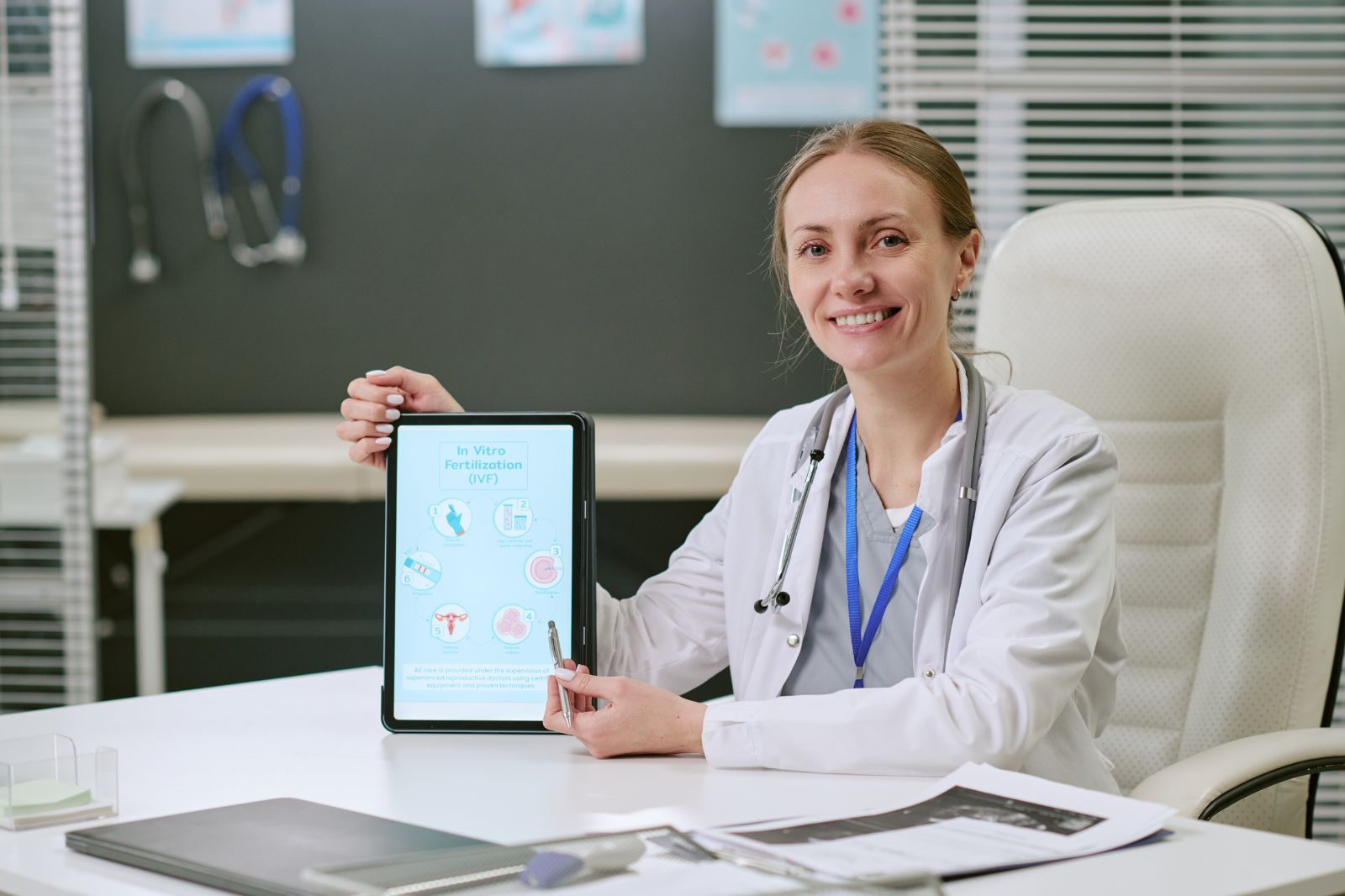
The Ultimate IVF Guide: Your Step-by-Step Journey
In case you happen to be experiencing difficulties in conceiving, there is no need to be afraid because in vitro fertilization is a very efficient and reliable fertility procedure and treatment method.
As you begin investigating your fertility options, it’s perfectly ok that you might be a little confused or overwhelmed. This guide details all the steps, starting with the process and finishing up when you will finally recover.
What is IVF?
So, what is IVF? An IVF is a medical procedure in which the egg is fertilised with the sperm outside the body in a specialized laboratory. The name ‘in vitro’ translates from Latin as ‘in glass’, and is a reminder of the glass dishes in which the tests are performed. Once fertilisation has occurred, the embryo is safely returned to the womb, which results in pregnancy.
Who Benefits Most from IVF?
- Women having their fallopian tubes blocked or damaged.
- People suffering from disorders such as PCOS or advanced endometriosis.
- Partners experiencing infertility problems on account of low sperm count or poor motility.
- Intended parents or people from the LGBTQ+ community planning to start a family.
IVF Step-by-Step Process
- Initial Consultation & Testing: You meet with a specialist, and both of you will be tested to tailor a plan.
- Ovarian stimulation: A woman is given medicine for 10–14 days to stimulate the growth of several mature eggs.
- Egg Retrieval: An easy and fast process done under sedation for the retrieval of mature eggs.
- In Vitro Fertilization and Development: The eggs and sperm cells are mixed to create embryos, and their development is observed.
- Embryo Transfer: The embryo is placed in the uterus with the help of a thin catheter using a gentle technique.
- Pregnancy Test: A blood test takes place approximately two weeks later to see if the cycle has been successful.
The IVF Timeline: A Week-by-Week Breakdown
| Phase | Duration | What Happens | What It Feels Like |
| 1. Testing & Plan | 1–2 Weeks | Blood tests & ultrasounds | Routine doctor visits |
| 2. Stimulation | 10–12 Days | Daily hormone injections | Mild bloating or PMS mood shifts |
| 3. Egg Retrieval | 1 Day | 20-min procedure to collect eggs | Painless (under twilight sedation) |
| 4. Lab Development | 3–5 Days | Eggs and sperm are combined | The anxious waiting game |
| 5. Embryo Transfer | 1 Day | The embryo is placed in the uterus | Quick, like a routine Pap smear |
| 6. The Two-Week Wait | 14 Days | Rest before the final pregnancy blood test | Hopeful, normal routine |
Hard Truths: IVF Success Rates by Age
Although lifestyle and embryo quality are key components, age is the major deciding factor in the success rate of IVF treatments. Here are the statistics, taken from SART (Society for Assisted Reproductive Technology), on the success rates of live births using a single embryo transfer:
| Age Group | Average Live Birth Success Rate | Key Focus for This Age |
| Under 35 | 45% – 50% | Highest egg quality often results in surplus embryos to freeze for future use. |
| 35 – 37 | 35% – 40% | Slight decline in egg reserve; early testing is highly recommended. |
| 38 – 40 | 20% – 25% | Genetic screening (PGT-A) of embryos is often suggested to boost success. |
| Over 40 | 5% – 12% | The use of donor eggs is frequently discussed to drastically improve odds. |
Note: At Little Angel IVF, we don’t just work off of averages. Your medication protocol is tailored based on your biological strengths.
Fact vs. Fiction: Debunking Common IVF Myths
A lot of myths exist on the Internet that create needless fear. Here are the facts behind the most common myths:
- Myth: It always results in twins. Modern clinics prefer transferring one embryo for a safe single-baby pregnancy.
- Myth: It is only for older women. It is used by couples of all ages to deal with structural issues, PCOS, or male infertility.
- Myth: It always works the first time. Many women conceive successfully for the first time, but if taking more than one time, then repeated attempts occur.
- Myth: IVF babies face health issues. Repeatedly over the years, increasing evidence has been building that the health development of children born with IVF is no different from that of any other child.
- Myth: The process is extremely painful. Egg retrieval is done under sedation. Other important procedures, like major injections, are done through an outpatient process that does not cause much pain.
Possible IVF Side Effects
As IVF makes use of hormonal drugs to stimulate the ovaries, you may suffer from a number of temporary side effects:
- Mild abdominal bloating and cramping
- Breast tenderness
- Moody and tired
- Injections sites bruises
Why Do Some IVF Cycles Fail?
These are the most common causes:
- Embryo Chromosomal Abnormalities: The embryo is genetically defective and cannot develop; this is a natural obstacle which is not affected by the clinic.
- Poor Egg or Sperm Quality: Lack of energy in the cells prevents fertilization and cell division.
- Implantation Issues: There could be implantation problems due to poor uterine lining or undetected uterine polyps.
In case of a failed cycle, we analyze the laboratory results thoroughly to move forward.
Quick Guide to IVF Recovery
Physically, IVF recovery is short and easy in most of the cases. The egg removal process may cause mild cramping or bloating, which lasts for about a day, and during which you should rest.
To help your body recover, here are a few simple tips to consider:
- Rest well and be conscious of your pain.
- Make sure you drink lots of fluid throughout the day.
- Adopt a balanced diet.
- Take your medications as prescribed by the doctor.
- Avoid doing strenuous activities like heavy lifting when advised by the doctors.
- Get advice from the doctor on what to do after the procedure.
Conclusion
A fertility procedure may turn out to be a complicated process, and getting pregnant successfully involves patience, a positive attitude and professionals. It is important to remember that the most reliable source of information concerning IVF treatment should be an expert consultation.
Little Angel IVF provides you with individual treatment programs under the supervision of our fertility specialist, Dr. Mona Dahiya. We are a family of 25,000+ happy families, a collection of 15,000+ successful cycles with an outstanding 90%+ success rate, committed to working with you from your initial consultation all the way to your treatment completion.
Frequently Asked Questions (FAQs)
1. What is the step-by-step process of IVF?
The IVF step-by-step process involves:
- Induction: Stimulation of eggs with 8 – 12 days of hormone injections.
- Retrieval: Collecting eggs through sedation.
- In vitro Fertilization: Fusing of the egg and the sperm in a laboratory setting.
- Transfer: Implantation of embryo into the uterus.
- Tests: A pregnancy blood test 9-14 days later.
2. What is a realistic IVF timeline?
One cycle is 4-6 weeks from the beginning of the period until the embryo transfer. The entire course of IVF lasts 2-3 months if you decide on a frozen embryo transfer or genetic screening.
3. How does age affect IVF success, and why do cycles fail?
The chances of success decrease with age due to poor quality of eggs; the live births chances exceed 45 percent for women aged below 35 years, while they drop down to 10-15 percent after 41 or 42 years. The main reasons for IVF failures are chromosomal abnormalities or absence of implantation in the uterus.
4. What are the main side effects and risks of IVF?
Some common side effects of IVF are bloating, mood changes, and breast tenderness. The most common major risk is overreacting to the medicines (OHSS), which is uncommon today, less than 2%, and is very well controlled.
5. What is the recovery time after IVF procedures?
One of the common IVF myths is that weeks of bed rest are required. IVF recovery is quick: If you are injected on the day of the egg recovery, you must be in recovery for that day only and will resume work 24-48 hours after the egg recovery.
