
Blastocyst Culture in IVF: Procedure, Succes rate & Risk
Today, we are going to learn in depth about one of IVF’s components, which is blastocyst culture.
Blastocyst culture simply means to grow the embryo in the lab until day 5 instead of day 3. This extra time allows the strongest of the embryos to reveal themselves. Then specialists pick the healthiest embryo to undergo for a successful pregnancy result. It is all about the timing and transfer that make this process more nature-oriented rather than a lab experiment.
At Little Angel IVF, we focus on utilizing blastocyst culture to bridge the gap between lab science and the dream of starting a family, also providing the best possible environment for the embryo to reach its full potential.

What is a Blastocyst?
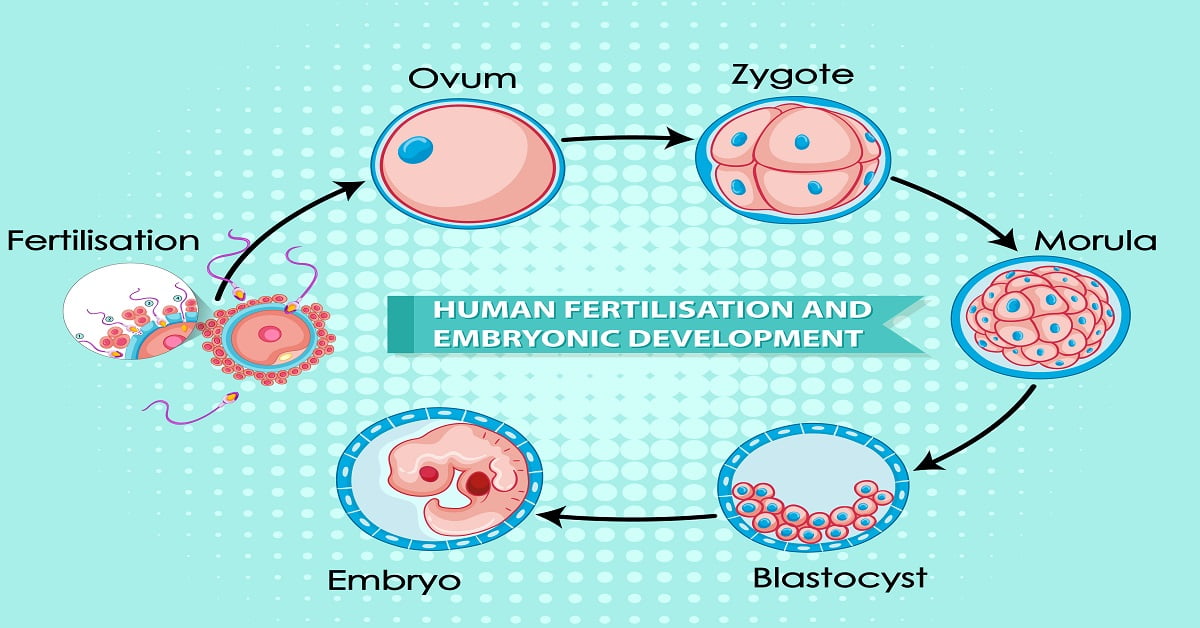
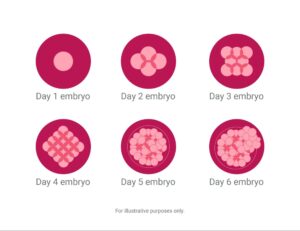
Once the egg and sperm come into contact, they form an embryo. The embryo during the initial few days is only a small sack of cells. On Day 3, it contains an average of 6 to 10 cells. This is a stage of embryonic cleavage.
However, when we leave that embryo to grow for a few more days, it becomes different. On Day 5 or Day 6, it develops into a Blastocyst. It contains hundreds of cells at this stage. It is also properly structured. Part of that will be the baby, and part of it will develop into the placenta.
A blastocyst is simply a more adult form of an embryo.
What is Blastocyst Culture ivf?
According to the normal IVF procedure, embryos were implanted back into the uterus on Day 3.
Blastocyst meaning implies delaying a little. Embryos are kept in the lab for 5-6 days.
Another very important thing is to keep in mind:
- The more you wait, the better embryos you’ll achieve.
Step-by-Step Process
- Hormone Injections:
For some days, you will receive medications and injections from your specialist. They help your ovaries produce more eggs than normal, giving doctors a better opportunity to work.
- Egg Collection:
The doctor extracts the mature eggs from the ovaries. It is a minor operation, while you will be asleep or sedated.
- Fertilization:
In the laboratory, the collected eggs are mixed with the sperm. Some of them become embryos.
- Lab Growth (The Waiting Time):
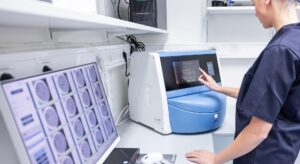
Embryos are kept in a special incubator. This machine functions like a body, allowing the embryos to grow until day 5.
- Selection:
The strongest embryos are chosen.
- Transfer:
The selected embryo is placed in the uterus.
Blastocyst vs. Day 3 Transfer
| Feature | Day 3 Transfer | Blastocyst Transfer (Day 5) |
| When is it done | The embryo is placed in your uterus on day 3 | The embryo is placed in your uterus on day 5 |
| Good for | Good when you have a few embryos and are not sure which ones will develop well | Better when you have many embryos, so that the doctors can select the healthier ones |
| Stage of growth | An early-stage embryo with just a few cells | A more developed embryo with several hundred cells |
| Ability to choose healthier embryos | Not as much time to evacuate the health of an embryo | Doctors can determine if one or both embryos are healthy enough to implant |
| Timing in relation to your cycle | Transferred before your body would normally release an egg | This procedure occurs closer to the time your body would naturally release egg |
| Number of pregnancies per transfer | May result in fewer pregnancies per transfer | Generally, results in more pregnancies per transfer |
Let’s Talk About Success Rates
Most of the time, for women under the age of 35, the percentage of successful blastocyst embryo transfers via the blastocyst stage (usually around 5-6 days after fertilization) averages about 45% to 60%.
However, other factors affect the success rate rather than the implantation date.
- Age: Your age has the biggest impact on the quality of your eggs.
- Quality of the Egg & Sperm: Good quality eggs and sperm equal good quality embryos.
- Health of Uterus: The uterus must be healthy, as it will be the “soil” for the embryo to grow.
- Quality of Lab Equipment: Lab equipment must be modern and advanced enough to support preserving the embryos for five days.
Why Doctors Like This Method
As a fertility specialist, Dr Mona Dahiya prefers blastocyst culture as it allows the embryo to grow naturally and identify itself. Reasons why doctors recommend waiting until Day 5:
- Better Selection: We know which embryos are actually capable of growing.
- Timing: In a natural pregnancy, the embryo has to wait until Day 5 before it reaches the uterus.
- Fewer Twins: Since blastocysts are more successful, we usually only conceive one embryo to avoid the risks of twins or triplets.
Risks and Limitations
IVF is a long race, with obstacles. Be aware of the following:
- Drop Off.
This is the most difficult part of the procedure. On Day 1, you may have 8 embryos, and on Day 3, you have 6. By Day 5, you may only have two blastocysts. In some cases, they all fail before Day 5. This does not imply that the lab failed. This normally implies the embryos were not fit to last a complete pregnancy.
- No Guarantees.
Even the ideal-looking blastocyst is not enough to be certain of a baby.
- Emotional Stress.
It is really tough to wait another two days (between Day 3 and Day 5). You just feel your heart race every time the phone rings.
- OHSS:
Some women will respond too strongly to the hormone injections. This is called OHSS. You may experience pain or bloating. This will be watched by your doctor.
- Cost
In order to grow longer embryos, lab work and auxiliary media (liquids) are needed. Thus, the bill will be higher.
What is a “Good Quality” Embryo?
Doctors examine the embryos in the lab using a microscope.
In a “good embryo,” cells are evenly dividing; the embryo looks well-organised, although it may have small pieces of waste or asymmetrical cells. If your embryo is given a grade C, it does not necessarily mean that it will not deliver a healthy and happy baby. The grade is simply the doctor’s measurement.
Is This Right for You?
Blastocyst Culture may be considered when:
- On Day 3, you have a good number of embryos.
- You have also had the failure of IVF.
- You are afraid of having twins.
Take caution when:
- You only have 1 or 2 embryos.
- You have a past of embryo failure in the laboratory.
In these instances, as a precaution, the doctor may recommend re-placing them on Day 3.
Frozen Blastocyst Transfer (FET)

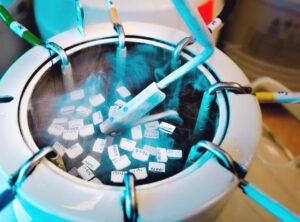
Sometimes, we do not immediately reinsert the embryo but freeze it.
Why? Your body has been through a lot during the egg harvest. Normally, a human body takes about a month or so to relax properly. After we notice your body is relaxed, we gently warm the frozen blastocyst and place it in your womb. This process usually results in higher pregnancy chances.
Cost in India
Blastocyst in India can be generally referred to as an “add-on” step.
- The Add-on Cost
If you are planning on doing an In Vitro Fertilisation (IVF) cycle, the total cost for the procedure of culturing the embryo to a blastocyst stage (Day 5) will be anywhere between ₹10,000 and ₹30,000.
- The Total Package
If you are going through a full IVF cycle, this will cost anywhere between ₹1.5 Lakh to ₹2.5 Lakh per cycle with blastocyst culture. This usually includes:
- Ovarian stimulation and scans
- Egg retrieval
- Lab fee (for fertilization and additional days in the lab)
- The embryo transfer
- Why the price varies
- City: The cost is 20-30% higher in cities like Mumbai and Delhi than in tier II cities.
- Lab Quality: The quality of the air-top incubators and culture media used for blastocysts may be different.
- Success-Based Packages: Some clinics will offer this as their “premium” package, which also includes other advanced techniques (ICSI).
Note: Be sure to check if the price quoted includes the drugs (injections) – this can cost another ₹40,000-80,000.
Conclusion
You can simply keep in mind that when you decide to opt for a blastocyst transfer, you are creating a convenient situation. You will be releasing the healthiest and strongest embryo.
When it is a long wait or the news is terrible, try to be gentle with yourself. You are doing everything you can to make this dream come true, and that is all. So, breathe deeply and lean on the doctors and think about what you will do next. Contact Best IVF Centre in Noida.
Frequently Asked Questions
1.Is it better to have a human blastocyst rather than a Day 3 embryo?
Obviously, it is preferred, although it is not always the best choice. It will depend on how many embryos are available.
2.Will it ensure I get pregnant?
No, although it increases the chances, IVF is not 100 % guaranteed.
3.Can one blastocyst become a twin?
Yes, but it is rare. There are situations where one embryo can divide into two (identical twins).
4.Will the baby be safe?
Yes. During the last few decades, blastocyst culture has produced millions of healthy babies.
5.What is Blastocyst in ivf?
This is an embryo that has developed for 5 or 6 days. It is more developed and has two distinct parts, one for the baby and one for the placenta.
6.When does a blastocyst become an embryo?
A blastocyst is simply a stage of the embryo. It is known as an embryo between fertilization and the 8th week of development, after which they are a fetus.
7.What is blastocyst implantation?
When the blastocyst attaches itself to the uterine lining (endometrium), this is known as implantation. This normally occurs 6 -10 days following fertilization and is required to ensure the embryo obtains oxygen and nutrients.
8.What are the phases of implantation?
Apposition: The blastocyst is in contact with the uterine wall.
Adhesion: It adheres to the lining.
Invasion: It penetrates the tissue to form a blood supply.