Frequently Asked Questions
What is considered poor ovarian reserve?
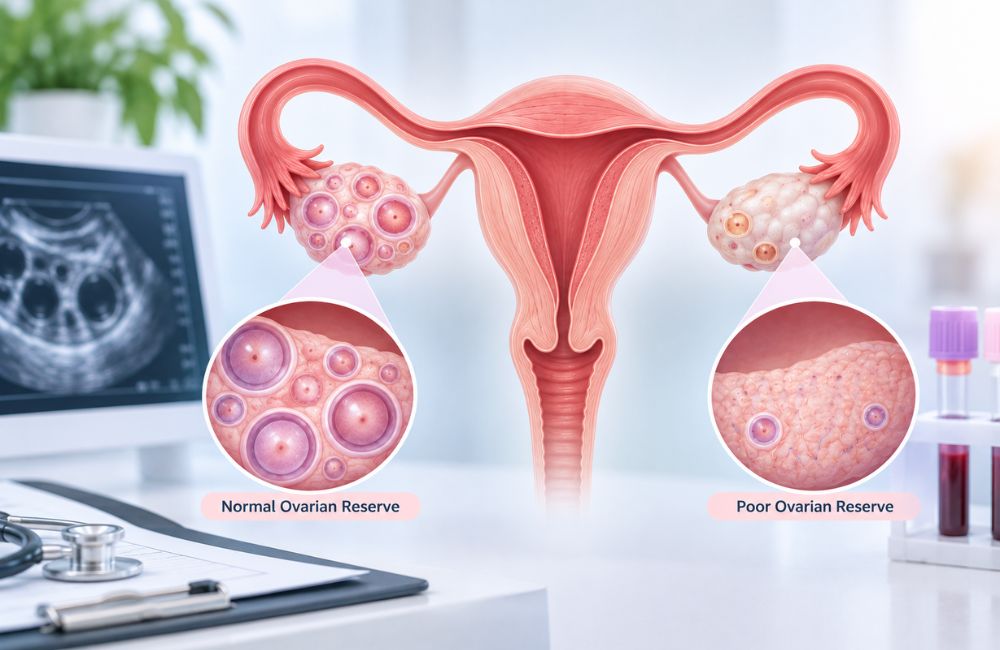
Poor ovarian reserve generally refers to a lower-than-average number of eggs remaining in the ovaries for a woman’s age. It is typically diagnosed through a combination of a low AMH blood level, a low antral follicle count on ultrasound, and clinical history.
Can I get pregnant with poor ovarian reserve?
Yes. A low reserve means fewer eggs are present, but it does not mean ovulation has stopped. As long as regular ovulation occurs and an egg is of viable quality, natural or assisted conception remains possible.
Can low AMH be improved naturally?
No. There are no scientifically proven lifestyle changes, diets, or supplements that can generate new eggs or significantly raise baseline AMH levels. Healthy habits support overall health, but cannot reverse natural ovarian biological decline.
Is IVF effective for diminished ovarian reserve?
IVF can be an effective approach because it maximises the chance of fertilising the few eggs retrieved in a single cycle. However, success varies based on female age, overall egg quality, and individual response to stimulation medications.
Does poor ovarian reserve mean poor egg quality?
Not necessarily. Ovarian reserve reflects the quantity of eggs left, whereas egg quality is largely related to age. A younger woman with low ovarian reserve may have fewer eggs, but those eggs often retain good developmental potential.
Take the Next Step in Your Fertility Journey
If you have concerns about your ovarian reserve or previous test results, an individual clinical evaluation can provide clarity. Contact Little Angel IVF today to schedule a consultation with our fertility specialists.