Frequently Asked Questions (FAQs)
1. What is an HSG test used for?
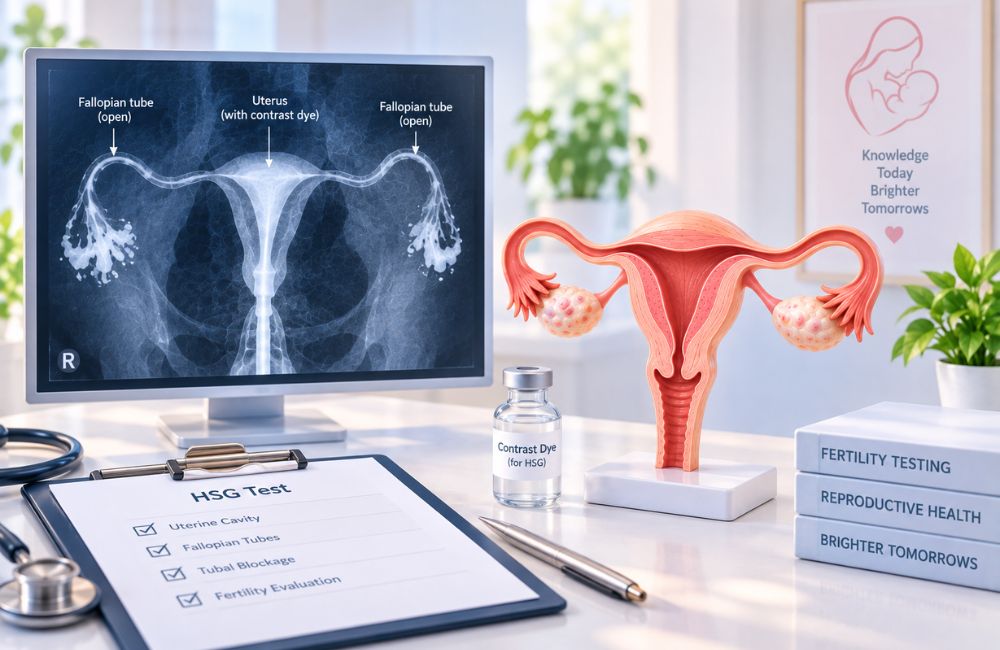
An HSG is used to assess female fertility by checking if the fallopian tubes are open and verifying whether the uterine cavity has a normal shape free of polyps, fibroids, or adhesions.
2. Is an HSG test painful?
Most women feel brief cramping and pressure similar to menstrual cramps while the dye is infused. Discomfort typically lasts only a few minutes and subsides promptly after the procedure.
3. How long does an HSG test take?
While the appointment may take 20 to 30 minutes for setup and consultation, the actual HSG procedure and imaging require roughly 5 to 10 minutes.
4. Can an HSG detect blocked fallopian tubes?
Yes. If contrast dye cannot travel the full length of a tube and spill into the pelvic cavity, it clearly indicates a tubal blockage or spasm.
5. What should I do after an HSG test?
You can resume normal daily activities immediately. It is common to experience light spotting and mild cramping for a day; wearing a sanitary pad and resting as needed is recommended.