What Does High FSH Mean?

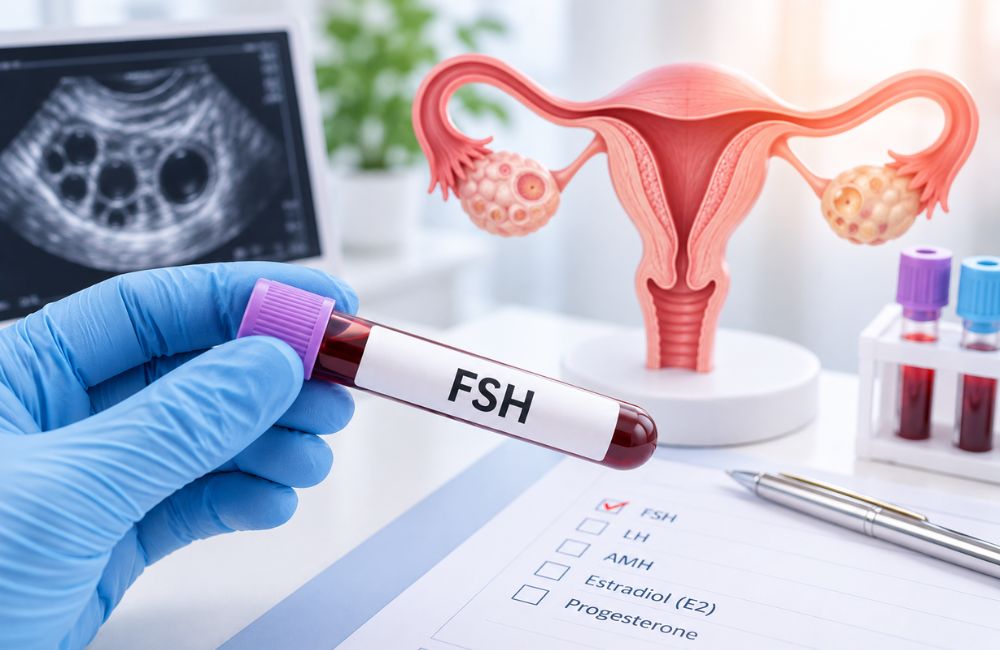
FSH is a hormone secreted by the pituitary gland to alert the ovaries to prepare an egg each month. The levels increase when the ovarian reserve depletes, and the ovaries become unresponsive.

FSH levels can fluctuate from cycle to cycle. Clinical guidelines from organisations such as the ASRM and ESHRE emphasize that a single elevated FSH reading, typically measured on day 2 or 3 of your cycle, should never be interpreted in isolation.

High FSH Levels Causes

An elevated reading can stem from several underlying biological or physiological factors. Common high FSH levels causes include:

  • Diminished Ovarian Reserve (DOR): Natural, age-related decline in egg quantity.
  • Primary Ovarian Insufficiency (POI): Reduced ovarian function occurring before age 40.
  • Prior Medical Treatments: Previous ovarian surgery, chemotherapy, or pelvic radiation.
  • Genetic or Autoimmune Factors: Conditions affecting baseline ovarian responsiveness.

High FSH and Low AMH

Patients frequently encounter high FSH alongside low AMH (anti-Müllerian hormone). While both markers provide insight into ovarian reserve, they evaluate different aspects:

  • FSH reflects ovarian response: It shows how hard the brain is working to recruit follicles during a specific cycle.
  • AMH reflects egg supply: Produced directly by growing follicles, AMH provides a stable estimate of the remaining follicle pool.

Because they measure different biological pathways, a targeted high FSH, low AMH treatment plan relies on evaluating both tests together, alongside an ultrasound.

Can You Get Pregnant with High FSH?

Yes, pregnancy is still possible for many women with elevated FSH. High FSH reflects reduced ovarian reserve and responsiveness; it does not dictate egg quality on its own. While natural conception may take longer and require closer monitoring, your actual likelihood of pregnancy depends heavily on age, overall reproductive health, and how your ovaries respond to clinical care.

High FSH Treatment for Pregnancy

There is no single “cure” for high FSH because hormonal levels reflect underlying ovarian reserve rather than a reversible condition. Instead, care focuses on maximizing your existing ovarian potential. Depending on your evaluation, options may include:

  • Cycle Monitoring & Timed Conception: For suitable candidates with regular ovulation.
  • Individualized Ovulation Induction: Gentle medical support to encourage follicle maturity.
  • Customised IVF Stimulation Protocols: Tailored medication regimens (such as microdose or antagonist protocols) designed to optimize egg response.
  • IVF Using Your Own Eggs: Attempted whenever an adequate, safe ovarian response can be achieved.
  • Donor Egg IVF: Thoughtfully discussed when ovarian response is severely diminished or previous treatments show that using your own eggs carries a very low likelihood of success.

Why Patients Trust Our IVF Specialists?

We have professional IVF doctor who deliver compassionate care with proven results.
25+

Years Experience

We have been helping couples build their families with safe fertility care.
90%

IVF Treatment Success Rate

Our high IVF cycle rates give you one of the best chances to become parents.
25,000+

Happy Couples

Thousands of couples have trusted us, and many are now proud parents.
30%

Lower Cost

Get world-class IVF treatments at a much more affordable IVF cost.

High FSH IVF Success Rate

Under the clinical direction of Dr. Mona Dahiya, Little Angel IVF maintains an industry-leading cumulative success rate of up to 90%+, achieved through advanced laboratory techniques, individualized protocols, and comprehensive cycle management.

When treating cases involving high FSH and diminished ovarian reserve, outcomes are tailored to individual biology. While high FSH reduces egg yield, your age and embryo quality drive the outcome per cycle:

  • Female Age: The single most reliable predictor of egg and embryo quality.
  • Egg Yield: Higher FSH often correlates with fewer eggs retrieved during a cycle.
  • Embryo Quality & Development: Laboratory outcomes and fertilization rates.
  • Sperm Quality & Uterine Factors: Endometrial lining receptivity, health, and male factor health.

Diagnostic Evaluation at a Glance

Test / Factor Clinical Assessment
FSH Measures brain-ovary signaling and expected ovarian responsiveness
AMH Provides a continuous, stable estimate of remaining ovarian reserve
Antral Follicle Count (AFC) Ultrasound count of active, visible resting follicles
Age Primary indicator of genetic normalcy and egg quality
Pelvic Ultrasound Assesses uterine structure, endometrial lining, and ovarian architecture

Frequently Asked Questions

1. Can I get pregnant naturally with high FSH?

Yes. If you are ovulating, natural conception remains possible. However, because high FSH may indicate reduced ovarian reserve, consulting a specialist helps determine whether timed conception or assisted treatment is the most time-effective route.

2. What FSH levels for pregnancy are considered ideal?

There is no single cut-off for FSH levels for pregnancy that guarantees or rules out conception. Values under 10 IU/L on cycle day 2 or 3 are generally considered standard, but fertility specialists interpret these figures alongside your age, AMH, and antral follicle count.

3. Can high FSH and low AMH be treated?

While diminished ovarian reserve cannot be reversed, fertility protocols can be adjusted to work with your remaining reserve. Treatment focuses on individualized ovarian stimulation, cycle optimization, or donor options rather than artificially forcing lab values down.

4. Does high FSH reduce IVF success?

High FSH often signals that the ovaries may yield fewer eggs during stimulation. However, if good-quality embryos are formed, especially in younger patients, successful implantation and a healthy pregnancy can still occur.

5. Can IVF work with high FSH?

Yes, IVF can work with elevated FSH. By using tailored protocols, specialists can carefully stimulate the ovaries to retrieve viable eggs, or guide you toward alternative family-building options if ovarian response remains low.


+91 9267982924