
Fertility Excellence for 25 Years
Little Angel IVF is a leadingof blocked fallopian tubes Treatment Clinic in Noida. Blocked Fallopian Tubes is caused by factors such as infections, pelvic inflammatory disease, endometriosis, or scarring from previous surgeries. Our Blocked Fallopian Tubes Clinic in Noida is led by one of the best fertility specialists in Noida, Dr Mona Dahiya. We provide advanced technology and personalized treatment options for couples struggling to conceive due to Blocked Fallopian Tubes.
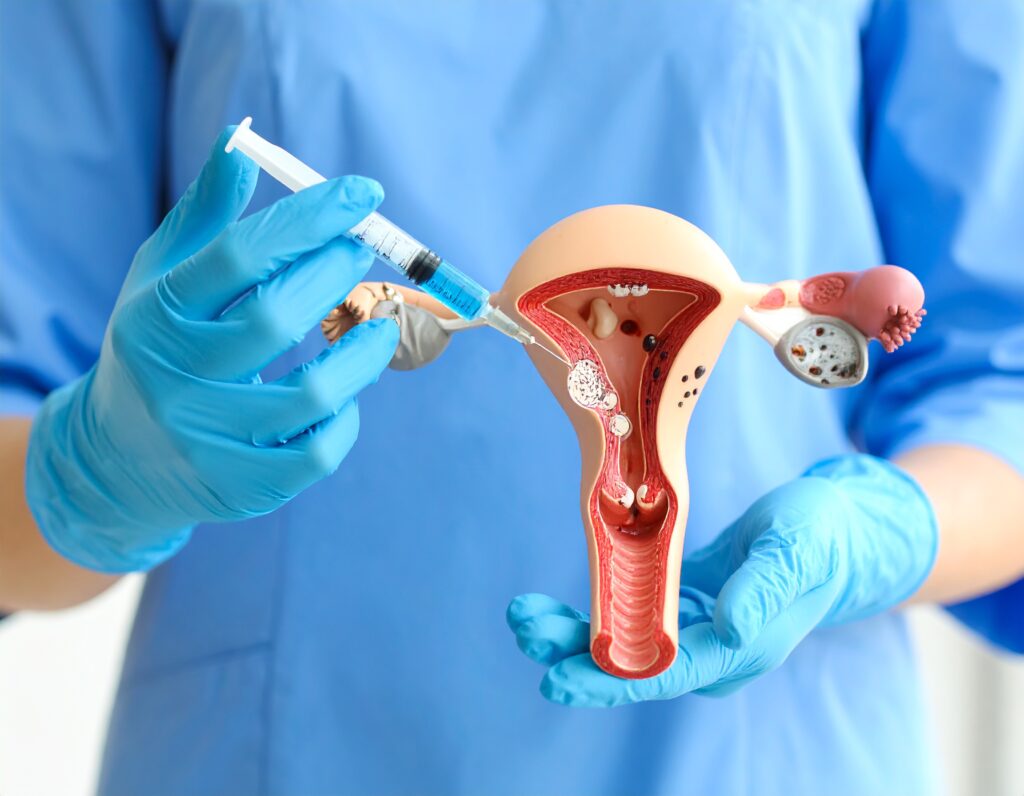
Our approach includes diagnostic tests to assess tubal blockages and identify the best treatment plan. Depending on the severity, treatment options range from minimally invasive procedures like tubal cannulation, laparoscopic surgery, Hysteroscopy, and in vitro fertilization (IVF). Little Angel IVF understands the emotional and physical challenges faced by couples dealing with blocked fallopian tubes. We have helped numerous couples experience the joy of a successful pregnancy, making us a trusted centre for blocked fallopian tube treatment in Noida.






Purpose: To Gauge Extent and Causes of Blocked Tubes.
Purpose: For Treatment of Mild Blockages.
Purpose: To remove Major blockages or damaged portions.
Purpose: If Tubes Cannot Be Unblocked
At our Noida Fertility center, we offer comprehensive treatment for blocked fallopian tubes. Dr Mona Dahiya employs diagnostic procedures like HSG and laparoscopy to assess blockage severity. This is followed by tailored interventions, including surgery or IVF, to help couples achieve positive results.

Meet the renowned Dr. Mona Dahiya at our Blocked Fallopian Tubes Treatment Clinic in Noida. Dr Mona specializes in treating blocked fallopian tubes and is an expert in procedures like HSG, laparoscopy, tubal cannulation, and IVF. Patients worldwide seek her guidance for fertility treatments. Dr. Dahiya is a prolific writer with numerous journals on blocked fallopian tube treatments published in international publications. She is a sought-after speaker at prestigious reproductive summits, including ESHRE (European Society of Human Reproduction and Embryology).
With 25 years of fertility expertise, Dr. Dahiya holds prestigious medical degrees, including MBBS from Lady Hardinge Medical College (Delhi), MD from Maulana Azad Medical College (Delhi), and a Fellowship in Reproductive Medicine from Singapore General Hospital (Singapore). She is a Senior Visiting Consultant at top IVF hospitals in Noida and Delhi, such as Apollo Fertility and Max Healthcare. Her success stories for Blocked Fallopian Tubes have inspired countless Indian couples, NRI patients and foreigners.

Blocked fallopian tubes can result from various factors, often contributing to female infertility. Here are some common causes:

Infections often sexually transmitted leading to inflammation and scarring in the fallopian tubes.
Tissue like the uterine lining can grow outside the uterus, potentially blocking or damaging the tubes.
Surgical procedures in the pelvic area, such as for ectopic pregnancies or ovarian cysts may cause tube blockage.
Infections in the uterus or nearby organs can spread to the fallopian tubes causing blockages.
Uterine growths can press on Fallopian tubes and cause blockages of the Fallopian Tubes.
Certain STIs, if left untreated can cause inflammation and scarring in the Fallopian tubes.
A surgical sterilization procedure that intentionally blocks or seals the fallopian tubes to prevent pregnancy.
Some individuals may be born with structural abnormalities in their Fallopian Tubes.
These factors can contribute to tubal blockages, impairing the natural process of egg fertilization and leading to infertility. Book an Online Consultation with Dr Mona Dahiya for treatment of Blocked Fallopian Tubes.
The Cost of Fallopian tube blockage treatment in India costs between ₹30,000 to ₹40,000 ($400 to $530 USD). The Cost is influenced by factors like blockage severity and the type of procedure (Salpingostomy, Salpingectomy, Laparoscopy, Hysteroscopy) for treatment of Blocked Fallopian Tubes.
Partially Blocked Fallopian Tubes can be treated without Surgery with Medications and tubal cannulation. Major Tubal Blockages in fallopian tubes are treated with surgical interventions like laparoscopy or hysteroscopy. While some minor blockages may be addressed with nonsurgical methods like tubal cannulation, successful treatment depends on the specific cause and severity. Consult a Fertility Specialist for medical or surgical intervention for optimal results.
There is no specific medication universally recognized as the best for unblocking fallopian tubes. Treatment options depend on the cause and severity of blockages. Surgical procedures like laparoscopy or hysteroscopy are often more effective, while minor blockages may be addressed with medications or tubal cannulation, under medical supervision. Consulting an IVF Doctor with Expertise in Blocked Fallopian Tubes is recommended.
The best way to unblock fallopian tubes depends on the cause and severity of blockages. Surgical procedures like laparoscopy or hysteroscopy are often recommended for significant blockages. However, minor blockages may respond to minimally invasive procedures or medications, such as tubal cannulation, under medical guidance. Consultation with a Female Infertility Specialist can give you the clarity.
Eggs remain Trapped in the Fallopian Tubes if Tubes are blocked. When fallopian tubes are blocked, eggs released from the ovaries cannot travel to the uterus for fertilization. Instead, they remain trapped in the fallopian tubes, preventing natural conception. In such cases, surgical procedures like Laparoscopy, Hysteroscopy and assisted reproductive techniques like in vitro fertilization (IVF) may be necessary to achieve pregnancy.
Ayurveda provides supportive therapies for blocked fallopian tubes, employing herbal remedies like Guggul, Ashwagandha, and Lodhra. Panchakarma and dietary changes are also recommended. However, success is not guaranteed, as effectiveness varies among individuals. Consulting an Ayurvedic practitioner is wise. Lodhra, known for its female reproductive health benefits, may indirectly impact fallopian tube health by promoting hormonal balance and menstrual regulation.
Opening fallopian tubes naturally may involve lifestyle changes, like maintaining a healthy diet, exercise, and reducing stress. Some suggest herbal remedies or practices like castor oil packs. However, their efficacy varies, and success is not guaranteed. Consultation with a Fertility Doctor is key for personalized guidance on unblocking fallopian tubes.
The latest treatments for blocked fallopian tubes include advanced minimally invasive techniques like hysteroscopic tubal cannulation or laparoscopic procedures for minor blockages. For severe cases, in vitro fertilization (IVF) remains a primary option. Research into innovative treatments continues and one must consult an IVF Doctor in India for more details.
Yes, many individuals have successfully conceived with blocked fallopian tubes, including celebrities like Chrissy Teigen and Tyra Banks. They achieved pregnancy through fertility treatments like in vitro fertilization (IVF). Blocked Fallopian Tubes challenges can be overcome with personalized treatment plans. Seek expert guidance from fertility doctors near you.
Below are the 7 Signs of Blocked Fallopian Tubes:
Transvaginal ultrasound (TVS) cannot directly detect blocked fallopian tubes. It is primarily used to assess pelvic organs’ structure and monitor follicle development during the menstrual cycle. To diagnose tubal blockages, specialized tests like hysterosalpingography (HSG) or laparoscopy are typically required for a more accurate assessment.
Yes, periods occur even if fallopian tubes are blocked. Blockages prevent the fertilization of eggs by sperm, but they do not affect the release of eggs from the ovaries or the uterine lining’s shedding during menstruation. Women with blocked tubes may experience regular menstrual cycles.
No, IVF (In Vitro Fertilization) is not the only option for blocked fallopian tubes. For minor blockages, procedures like tubal cannulation or hysteroscopic interventions may help. However, severe blockages often necessitate IVF, as it bypasses the need for open tubes to achieve pregnancy by fertilizing eggs outside the body.
Yes, pregnancy is possible after laparoscopy for blocked fallopian tubes, especially if the blockage is successfully removed or treated. Laparoscopy can improve the chances of natural conception by restoring the tubal function. However, achieving pregnancy depends on various factors, including overall fertility health.
In some cases, an HSG (Hysterosalpingogram) test can temporarily open minor tubal blockages by the force of the contrast dye pressure. However, this effect is usually short-lived, and HSG is primarily a diagnostic tool to identify tubal blockages rather than a treatment to permanently open them.
Antibiotics are used to treat infections that may contribute to tubal blockages, such as pelvic inflammatory disease. While antibiotics can resolve infections, Antibiotics cannot open blocked fallopian tubes. Procedures like hysterosalpingography (HSG) or surgery may be necessary to address the physical blockage itself.
Getting pregnant with blocked fallopian tubes often involves medical intervention. Options include tubal surgery to remove blockages, in vitro fertilization (IVF) to bypass the tubes, or tubal cannulation to open minor blockages. Success depends on the specific cause and extent of the blockages, and consultation with a fertility specialist in India is suggested.
The success rate of unblocking fallopian tubes varies:
There are two main types of fallopian tube blockages:
On average, recovery from blocked fallopian tube surgery may take approximately 7 to 10 days. However, individual recovery times can vary based on the specific procedure performed and the patient’s overall health. Consult a Female Infertility Doctor or a Laparoscopic surgeon for detailed information on recovery time.
C-sections, while unrelated to fallopian tubes, can sometimes lead to adhesions or scar tissue formation in the pelvic area. In rare cases, these adhesions may contribute to tubal blockages. However, C-sections themselves do not directly cause blocked fallopian tubes, and most C-sections do not lead to this complication.
Fallopian tubes cannot be seen on standard ultrasound scans clearly. Their small size and position deep within the pelvis make them challenging to visualize using ultrasound alone. Specialized tests like hysterosalpingography (HSG) or laparoscopy are usually required to assess the condition of the fallopian tubes.
PCOS cannot cause Blocked Fallopian Tubes.PCOS (Polycystic Ovary Syndrome) primarily affects the ovaries and hormonal balance, not the fallopian tubes. While PCOS can lead to irregular ovulation and infertility, it does not directly cause blocked fallopian tubes. However, PCOS-related fertility issues may coincide with other factors contributing to tubal blockages.
Yes, it is possible for one fallopian tube to produce twins if two eggs are released during ovulation, and each egg is fertilized by a separate sperm. In this scenario, each egg may travel through one of the fallopian tubes, leading to a fraternal (non-identical) twin pregnancy.
If a fallopian tube is not visible in an HSG (Hysterosalpingography) test, it may indicate a potential blockage or an issue with the test’s contrast dye delivery. Further evaluation through procedures like laparoscopy or additional imaging tests may be necessary to assess the condition of the fallopian tubes accurately.
Main causes of blocked fallopian tubes include:
In India, the cost of fallopian tube flush typically ranges between ₹30,000 to ₹40,000.
Yes, fallopian tube blockages can often be treated. The approach depends on the cause and severity of the blockage. Options include surgery to remove obstructions, minimally invasive procedures like tubal cannulation, or in vitro fertilization (IVF) to bypass the tubes for conception. Treatment success varies based on individual factors. Contact Little Angel IVF for further details.
Yes, doctors can unblock fallopian tubes through various medical procedures. Techniques like laparoscopy, hysteroscopy, and tubal cannulation are often used to address blockages. The choice of method depends on the specific cause and extent of the blockage. Consultation with a Top fertility specialist in India like Dr Mona Dahiya is recommended.
Fallopian Tube Blockage Test is not very Painful. The test for fallopian tube blockage, such as an HSG (Hysterosalpingography) or laparoscopy, can cause discomfort but is generally not considered extremely painful. Some women may experience cramping or mild pain during these procedures, but the discomfort is usually temporary and manageable with pain relief medication.
Our patient coordinator will call you soon to confirm your appointment.