What Is an HSG Test?

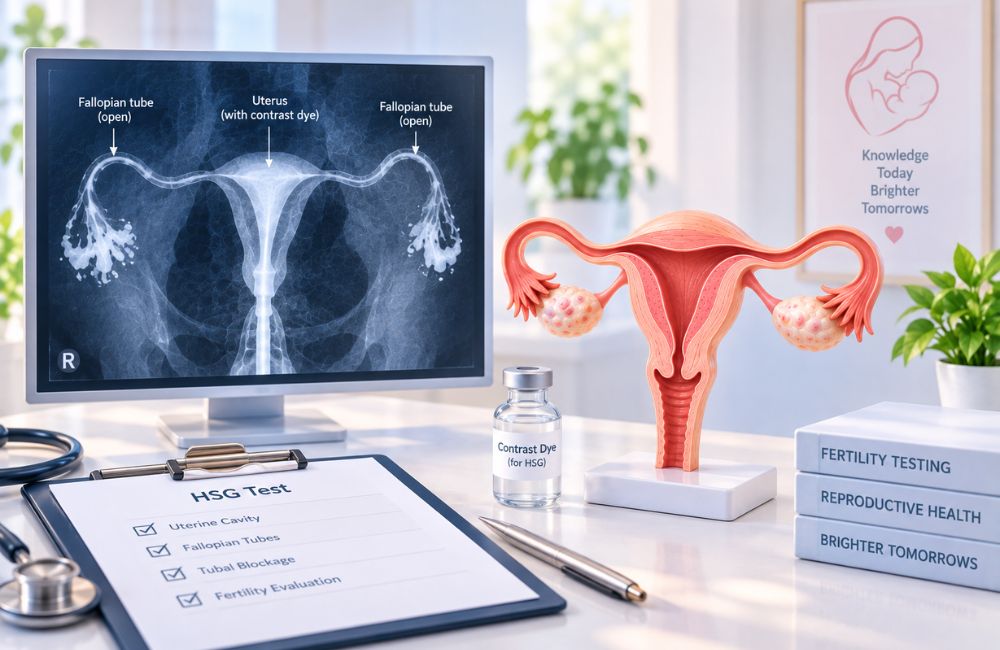
The test is called a fluoroscopic procedure (X-ray in real time) and involves the use of a safe iodine solution. Knowing what occurs during the HSG test will make preparation for the test easier because the liquid enters the uterus and passes through the fallopian tubes.

Aspect What to Know
Primary Purpose Checks the uterine cavity shape and assesses whether fallopian tubes are open
Method Radiopaque contrast liquid paired with real-time fluoroscopy (X-ray)
Common Sensation Mild-to-moderate cramping or pelvic pressure during dye injection
Clinical Value Informs personalized fertility pathways (natural, IUI, or IVF)

Why Is an HSG Test Done?

Your fertility specialist may recommend an HSG test for blocked tubes and uterine assessment for several clinical reasons:

  • Investigating Infertility: Identifying physical barriers preventing egg and sperm from meeting.
  • Suspected Tubal Obstruction: Checking for blockages caused by prior pelvic inflammatory disease (PID), endometriosis, or previous abdominal/pelvic surgeries.
  • Evaluating the Uterus: Identifying structural abnormalities, including uterine fibroids, endometrial polyps, scar tissue (adhesions), or congenital uterine anomalies.
  • Recurrent Pregnancy Loss: Assessing whether structural defects in the uterine cavity may be contributing to repeated miscarriages.

HSG Test Procedure: What Happens?

The hysterosalpingogram procedure is typically performed between cycle days 7 and 10 (after your menstrual bleeding stops but before ovulation). The step-by-step process includes:

  1. Positioning: You rest comfortably on an examination table, positioned similarly to a routine pelvic exam.
  2. Speculum Insertion & Cleaning: A speculum is gently placed in the vagina, and the cervix is cleansed with an antiseptic solution.
  3. Catheter Placement: A thin, flexible tube (catheter) is inserted through the cervix into the lower uterus.
  4. Contrast Introduction: A radio-opaque contrast dye is slowly infused through the catheter.
  5. X-Ray Imaging: As the dye fills the uterus and travels through the fallopian tubes, rapid X-ray images are captured to track whether the fluid spills freely into the pelvic cavity (indicating open tubes).

The active imaging process usually takes only 5 to 10 minutes.

Is an HSG Test Painful?

It is natural to be concerned about HSG test pain. Most women experience mild to moderate menstrual-like cramping and lower pelvic pressure as the contrast liquid fills the uterus and distends the tubes.

Pain levels vary based on individual pain tolerance, uterine sensitivity, and whether a tubal blockage is present. Discomfort typically peaks for only 1 to 2 minutes during the injection and subsides quickly once the catheter is removed. To manage sensations, your clinician may recommend an over-the-counter pain reliever (such as ibuprofen) 30 to 60 minutes prior to the appointment.

HSG Test Cost Delhi

When planning your evaluation, the HSG test cost in Delhi typically ranges between ₹2,500 and ₹5,000 for a standard procedure, with fertility test packages or advanced digital imaging ranging from ₹4,000 to ₹8,000. Across the National Capital Region, overall pricing varies depending on:

  • Procedure Type: Standard HSG (₹2,500 – ₹5,000) versus digital high-definition fluoroscopy (₹4,000 – ₹6,500).
  • Pain Management / Sedation: Opting for local anaesthesia or mild sedation (typically ₹5,500 – ₹10,000).
  • Facility & Clinical Inclusions: Advanced sterile disposable cannula kits, radiology charges, and specialist post-procedure consultation reviews (₹800 – ₹2,000).

Why Patients Trust Our IVF Specialists?

We have professional IVF doctor who deliver compassionate care with proven results.
25+

Years Experience

We have been helping couples build their families with safe fertility care.
90%

IVF Treatment Success Rate

Our high IVF cycle rates give you one of the best chances to become parents.
25,000+

Happy Couples

Thousands of couples have trusted us, and many are now proud parents.
30%

Lower Cost

Get world-class IVF treatments at a much more affordable IVF cost.

What Do HSG Results Mean?

An HSG provides clear anatomical findings that guide your treatment direction:

  • Open (Normal) Tubes: The contrast spills freely out of the tube ends into the peritoneal cavity, confirming no mechanical obstruction.
  • Tubal Blockage: If the dye stops abruptly, it indicates a blockage near the uterus (proximal) or at the outer end (distal/hydrosalpinx).
  • Uterine Irregularities: Variations in dye filling can indicate polyps, septums, or fibroids.

Note: An HSG assesses tubal openness and the inner uterine cavity; it does not evaluate ovarian reserve, egg quality, or the outer surface of pelvic organs. Your results must always be reviewed by a qualified fertility specialist in conjunction with your comprehensive medical history.

HSG Test & Fertility Care at Little Angel IVF

At Little Angel IVF, diagnostic testing is never a standalone checklist item, it is the foundation of an individualized treatment roadmap. Under the leadership of renowned fertility specialist Dr. Mona Dahiya, each patient undergoes a thoughtful fertility assessment considering their complete medical history, reproductive goals, and targeted diagnostics.

For cases where tubal factor infertility or structural issues are detected, Dr. Mona Dahiya and the clinical team formulate evidence-based treatment plans—ranging from minimally invasive corrective procedures to advanced reproductive technologies. Supported by state-of-the-art laboratory infrastructure and compassionate clinical care, Little Angel IVF consistently achieves an established 90%+ clinical success rate across tailored fertility treatments.

Frequently Asked Questions (FAQs)

1. What is an HSG test used for?

An HSG is used to assess female fertility by checking if the fallopian tubes are open and verifying whether the uterine cavity has a normal shape free of polyps, fibroids, or adhesions.

2. Is an HSG test painful?

Most women feel brief cramping and pressure similar to menstrual cramps while the dye is infused. Discomfort typically lasts only a few minutes and subsides promptly after the procedure.

3. How long does an HSG test take?

While the appointment may take 20 to 30 minutes for setup and consultation, the actual HSG procedure and imaging require roughly 5 to 10 minutes.

4. Can an HSG detect blocked fallopian tubes?

Yes. If contrast dye cannot travel the full length of a tube and spill into the pelvic cavity, it clearly indicates a tubal blockage or spasm.

5. What should I do after an HSG test?

You can resume normal daily activities immediately. It is common to experience light spotting and mild cramping for a day; wearing a sanitary pad and resting as needed is recommended.

+91 9267982924